Headache is one of the most common symptoms reported to doctors, according to Clinical Methods. A headache is defined as pain in any region of the head, which includes the skin, muscles, blood vessels, sinuses, dental structures and cranial nerves. Headaches are classified into two groups. Primary headaches are those that are caused by dysfunction or overactivity of the pain-sensitive features in the head, as described by the doctors at the Mayo Clinic. Secondary headaches, which are rarer, are caused by an underlying disease. There are five types of headache, the determination of which is based upon how the pain of the headache is produced.
Vascular
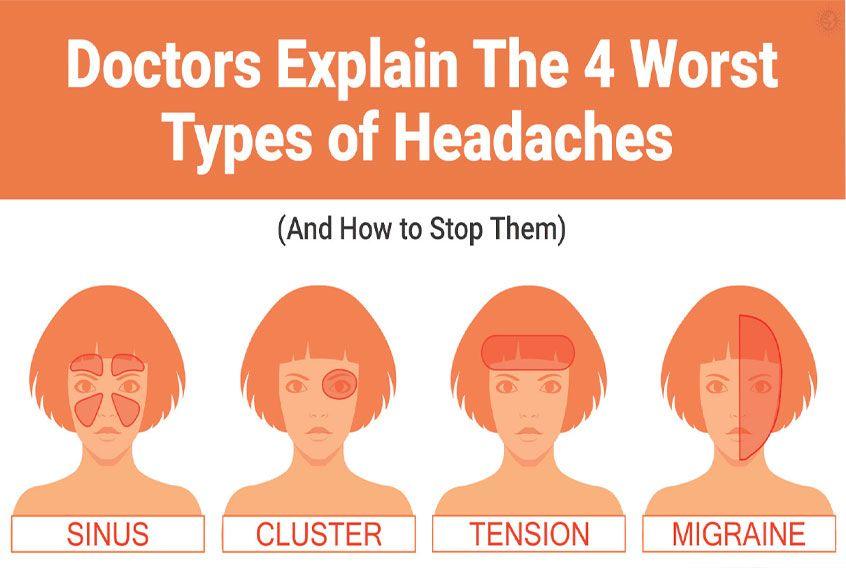
Vascular headaches occur as a result of pain produced by the dilation of the blood vessels in the head. The most common type of vascular headache is a migraine, which affects approximately 28 million people in the United States, as reported by the American Headache Society. Migraine headaches are recurrent and last between four and 72 hours. The pain of a migraine ranges from moderate to severe, is pulsating and may occur on both sides of the head, or on only one side. Other symptoms of migraines include visual or sensory auras, nausea, vomiting and sensitivity to light and/or sounds. The American Headache Society reports that women are more likely than men to suffer from migraines, accounting for three out of four migraine sufferers.
Cluster
Cluster headaches, another type of vascular headache, affect more men than women at a ratio of six to one, according to the Cluster Headache Support Group. Cluster headaches cause excruciating pain that lasts between 15 to 180 minutes. These headaches always occur on one side of the head, often just behind the eye or the temple area. Cluster headaches recur at specific times of day, often during sleeping hours, for four to eight weeks, followed by periods of remission, as described by the Cluster Headache Support Group.
Myogenic
Myogenic headaches, more commonly referred to as “tension headaches,” are caused by tight muscles in the neck, shoulders, scalp or jaw. This type of headache is often triggered by stress, anxiety or depression. Tension headaches, the most common of all headaches, are characterized by mild to moderate pain, often described as dull or aching. Myogenic headaches are often accompanied by a loss of appetite.
Inflammatory
Inflammatory headaches are secondary headaches that are caused by diseases or disorders that result in inflammation in the head. The most common type of inflammatory headache is the sinus headache caused by inflammation of the sinuses that accompanies allergic reactions. Another cause of inflammatory headaches is meningitis, which is inflammation of the membranes surrounding the brain and spinal cord.
Traction
Traction headaches are caused by masses or lesions that put pressure on the structures and blood vessels in the head. Conditions such as metastatic tumors, abscess or hematomas–a localized swelling filled with blood–can cause traction headaches. This type of headache is often more severe in the morning, according to Clinical Methods, and becomes worse when coughing, urinating or straining.
—
References
- Clinical Methods: Headache
- The Mayo Clinic: Headache Causes
- The Complete Guide to Headache: What are the Different Types of
Headache? - American Headache Society: Types of Headache
- Cluster Headaches: Worldwide Cluster Headache Support Group
LIVESTRONG.COM is designed to inspire people to change their lives, help themselves and help others. For more on this topic, visit livestrong.com.
About this Author
Stephanie Chandler is a freelance writer whose master’s degree in biomedical science and over 15 years’ experience in the scientific and pharmaceutical professions provide her with the knowledge to contribute to health topics. Chandler has been writing for corporations and small businesses since 1991. In addition to writing scientific papers and procedures, her articles are published on Overstock.com, Helium.com and other websites.